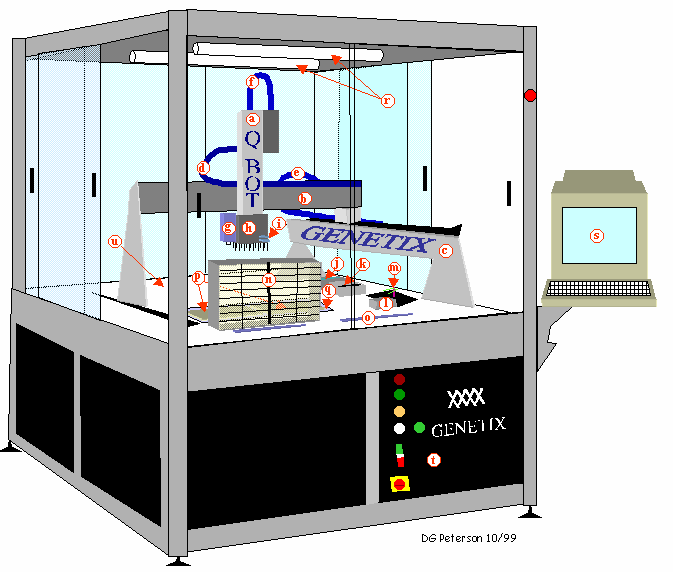
The Genetix Qbot
The QBot is roughly cube shaped (length = 2 m, width = 1.6 m, height = 1.97 m) and weighs about 900 kg. It possesses a robotic arm that carries out all of its automated tasks except removing microtiter plate lids from plates placed on the plate holder and shifting the microtiter plates in the plate holder. At the bottom of the arm is a "head" composed of 96 or 384 pins (depending on the application). On the front of the arm is a "plate gripper" which is used to move microtiter plates one at a time between a storage rack (known as a "hotel") and a plate holder. The arm is simultaneously moved along two horizontal perpendicular tracks allowing it to be positioned anywhere in a plane above the work surface. A track running vertically along the back of the QBot arm allows the arm to be moved up and down. In the diagram above, the QBot is set up for picking. In the figure: a = robotic arm, b = x axis track, c = y axis track, d = x axis cable guides, e = y axis cable guides, f = z axis cable guides, g = video camera, h = picking head with pins, i = plate gripper, j = ethanol wash bath, k = blow drier (hot air), l = plate holder, m = microtiter plate lid manipulator, n = hotel containing thirty-six 384-well microtiter plates, o = site at which a second hotel can be installed, p = X/I/C trays with colonies (lids removed), q = light table, r = UV lamps, s = computer monitor and keyboard, t = panel with on/off switches and warning lights, and u = main bed (used during replication and gridding applications). The QBot’s computer is located in the lower half of the machine (hidden from view). When the machine is set up for plate replication, the tray holder (on top of the light table) is removed, and four "microtiter plate holding blocks" (collectively holding 24 microtiter plates) are installed on the main bed of the QBot. During gridding, 15 nylon membranes are placed on 15 "filter holding blocks" on the QBot's main bed.
Return to CONTENTS
Go on to APPENDIX E